Launch price — $49 $27 for all three Ends in 23:59:59 Get it

Three field guides · every claim sourced

The $3,800 mistake
most people make with a bat.

A bat in the bedroom is the one encounter where doing nothing costs the most, and almost nobody knows the rule. That entry is one page. The three guides cost $27 during launch — $49 after.

The agencies already counted what is actually dangerous in an American yard. Almost nobody reads it. I did, and put it into three field guides with the document printed beside every line.

  • What is arriving — what moved into your part of the country, and how fast.
  • The encounter — the ten seconds after you see it, species by species.
  • What bites, stings and sickens — the small things that actually reach you.
Get all three — $49 $27 Free field card first
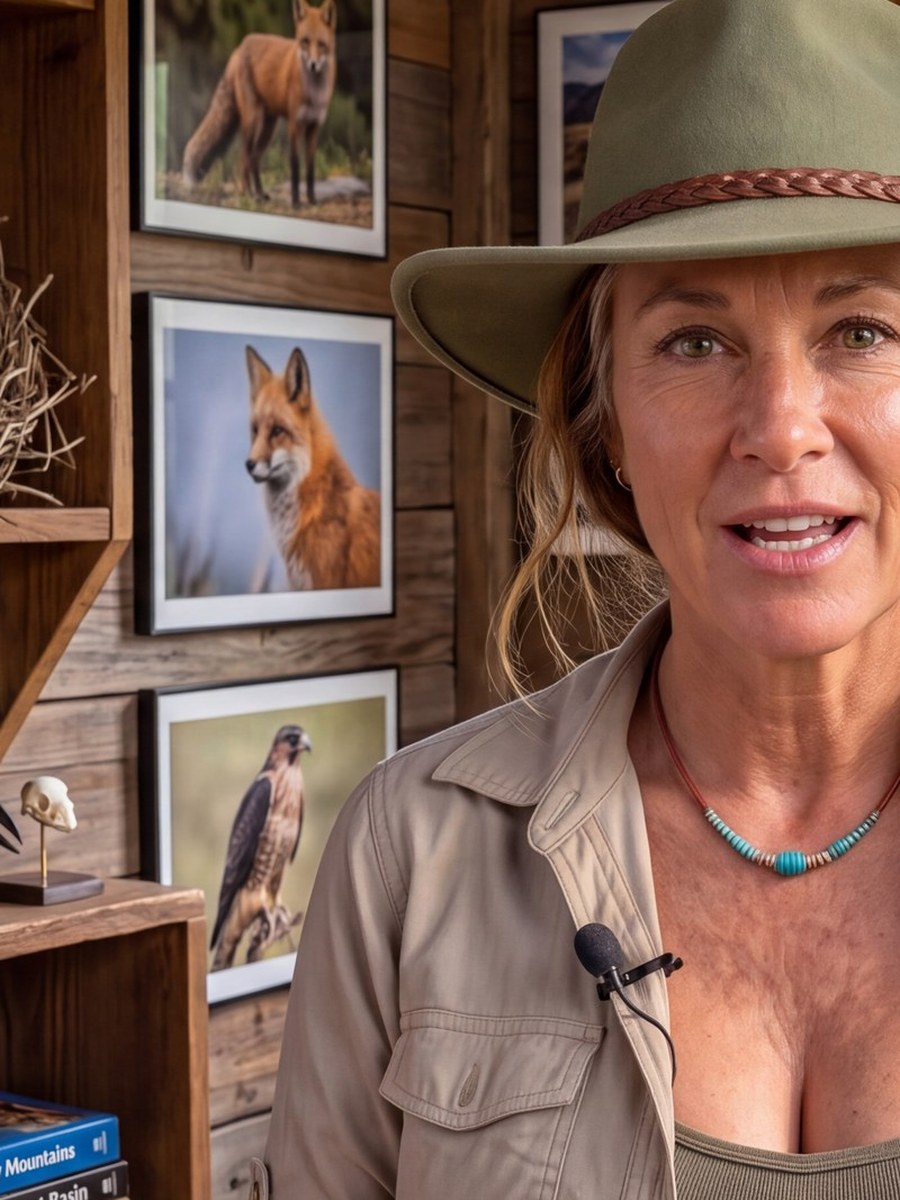
Eleanor in her field office: framed raptor and fox plates, a catalogued skull, reference volumes and a window onto conifer forest.
“Thirty years of field survey work. Counting what is there, mapping what is left.”Eleanor
192pages, three volumes
120entries, each sourced
139public documents cited
60day guarantee

The problem

You have been told the wrong animal is the dangerous one.

Not by liars, but by people repeating each other, at volume, for years, while the agencies that actually count these things published the opposite and nobody looked.

5

deaths a year from every venomous snake in the United States — against 7,000 to 8,000 bites.

CDC / NIOSH · updated 3 March 2026

238

people killed in one year by vehicles striking or trying to avoid an animal.

Cited by New York State DEC · 2015 data

0

recorded coral snake bites in all of North Carolina's recorded history — a snake whose venom the same page calls potentially fatal.

NC Wildlife Resources Commission

“Serious injuries caused by alligators are rare in Florida.”

Florida Fish and Wildlife Conservation Commission — the same sentence on three separate pages

The most dangerous animal in America is the one standing at the roadside, and the encounter happens at fifty miles an hour. That is not a scary story. It is arithmetic, and it is in the guides with the agency named beside it.

Field card · free

The five that are worth knowing before you need them

  • 01The bat in the bedroom, and why releasing it is the expensive move
  • 02Brake, do not swerve — and the federal phrase that explains why
  • 03The tick: pull it straight out, and the remedies to put down
  • 04Black bear, brown bear, moose — three animals, three opposite rules
  • 05The number to call before the vet, and what it costs

Each one with the agency that published it · 4 pages · PDF

Free, before you decide anything

The five-page card I would hand a new neighbour.

Not a sample chapter and not a teaser. It is the five things from across all three volumes that are worth knowing before the moment you need them — each with what to do and the document it came from.

If the card alone is useful and you never buy the guides, that is a fine outcome. It is how you find out whether the rest is written for you.

One email with the PDF. Unsubscribe in one click, and I do not sell the list.

The math

What one wrong answer costs.

Every figure below is a published federal or veterinary number, with the source named. Not a projection, not a range I invented — the entry in the book carries the same citation.

Getting it wrong

  • A bat in the bedroom, released before anyone calls$3,800CDC, MMWR Vital Signs — post-exposure treatment, median
  • A venomous snakebite treated in hospital$31,343Average per person, payer perspective, 2023 CMS rates — not the six-figure charges you read about
  • A dog that ate the wrong thing from the counter$733Trupanion claims, 2019–2023 — xylitol, median
  • A tick bite caught late instead of early~2×CDC / EID — disseminated costs roughly double early-stage
  • A night with a carbon monoxide leak and no alarm$9,554CDC-authored study, in 2013 dollars — hospitalisation, range to $11,678

These are medians from published sources, not guarantees. Costs vary by state, by insurance and by severity, and the books say so on the page where each one appears.

The collection

All three, once, $49 $27.

192 pages · 120 entries · 139 public documents cited. Instant PDF, read on anything, yours to keep.

Get all three — $49 $27 Save $22 — 45% off the $49 list price. Single volumes $14.99.

What is inside

Three volumes, in the order you would actually need them.

One tells you what is out there now. One tells you what to do in the ten seconds after you see it. One covers the small things that are far more likely to reach you than anything with teeth.

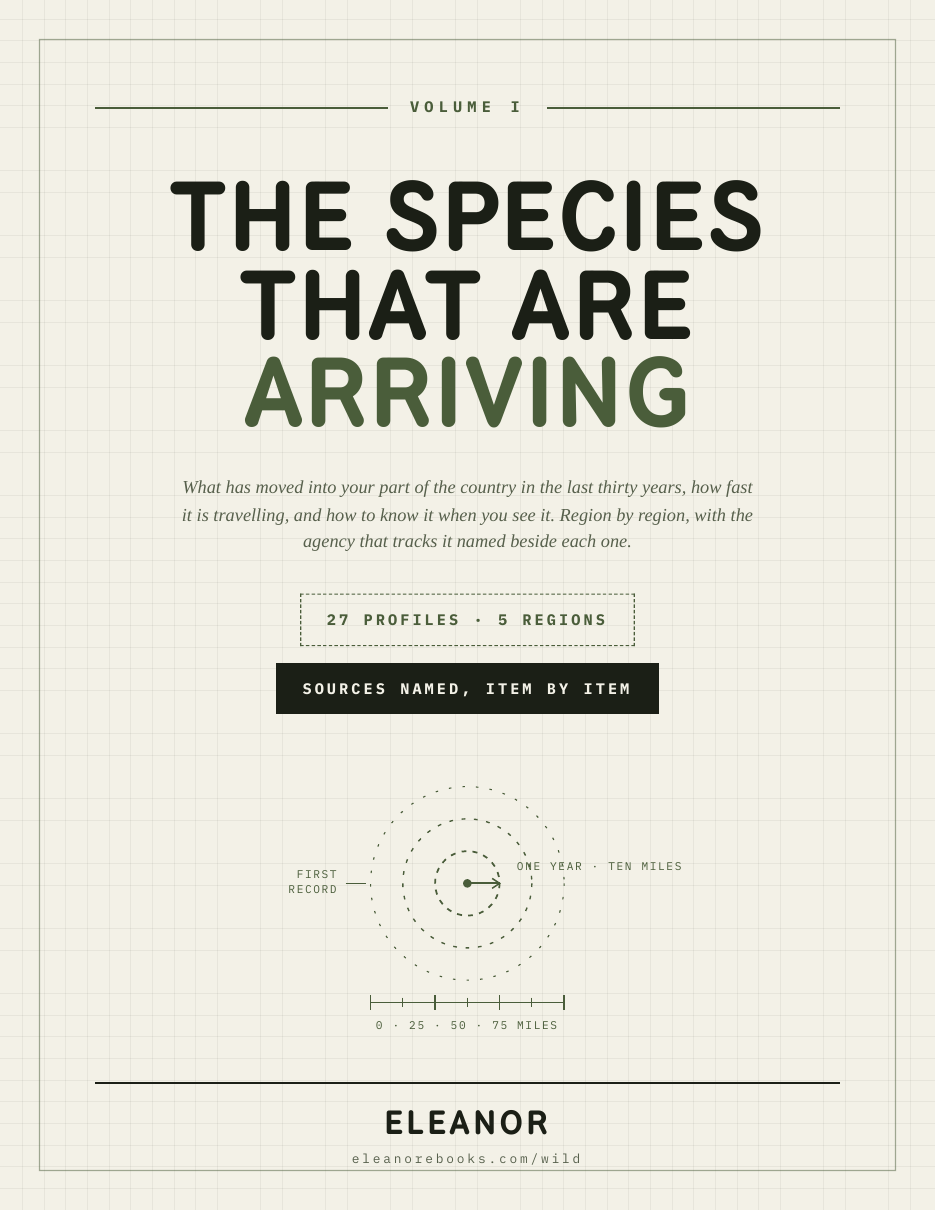
Cover of Volume I, The Species That Are Arriving. Volume I · 60 pages · 29 entries

The species that are arriving

Something moved into your county in the last thirty years and nobody sent a notice. This volume is organised by region, so you start with your own, and every range and date carries the agency that measured it.

You will find out which arrivals are genuinely a problem, which are famous for no reason, and which ones were moved here on purpose by state agencies. Several of the entries end by telling you the animal is harmless — that is the point.

What you find out

  • Which arrival near you is genuinely a problem, and which three are famous for nothing
  • The tick moving north that does not carry Lyme — and the one that does
  • Four thousand black bears became eighteen thousand, and it was deliberate
  • The animal a state agency moved into nine states on purpose
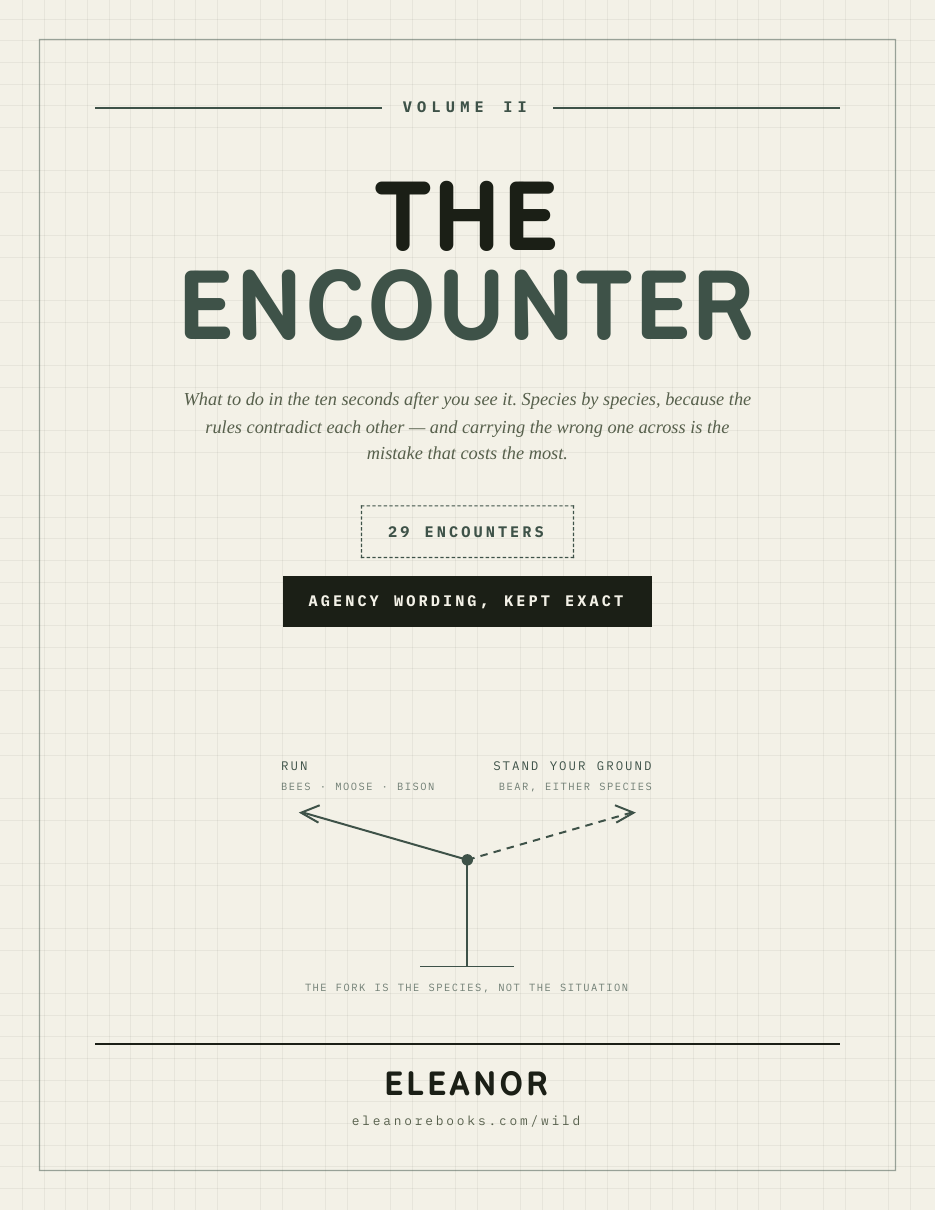
Cover of Volume II, The Encounter. Volume II · 53 pages · 31 entries

The encounter

The ten seconds after you see it, species by species — because the correct answers contradict each other and carrying the wrong one across is the mistake that costs most.

Black bear and brown bear want opposite responses. So do moose and bear. This volume opens with those contradictions laid side by side, then works through the animals people actually meet, including the one that kills far more Americans than every venomous snake combined.

What you find out

  • The rule that works before you know which snake it is
  • Why bear and moose want opposite responses, and what happens if you mix them up
  • The animal that kills more Americans than every venomous snake combined — it is not on any list you have seen
  • A sentence a state agency wrote to revoke what you were taught as a child

Treatment after a venomous snakebite averaged $31,343 per person in a 2025 study. This volume is $14.99.

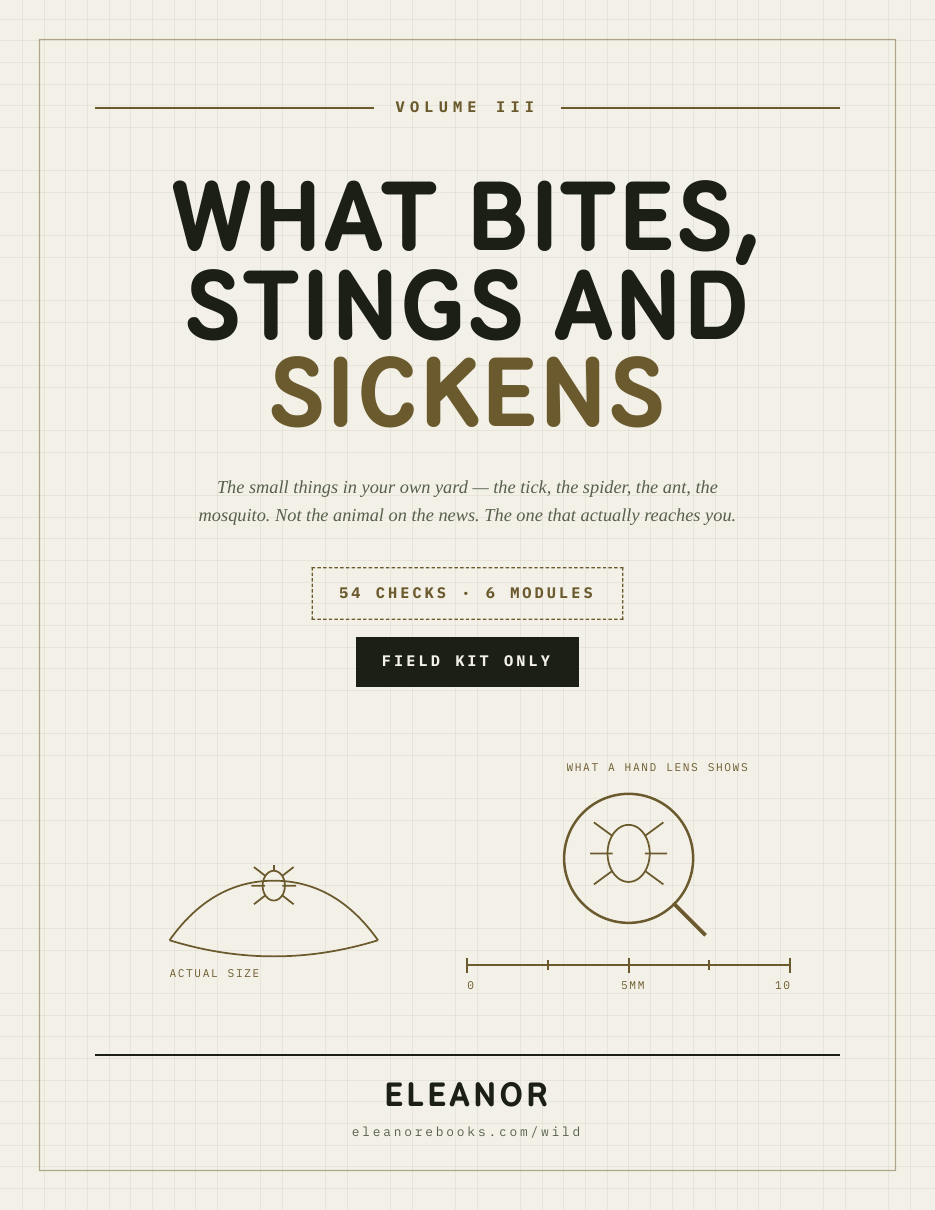
Cover of Volume III, What Bites, Stings and Sickens. Volume III · 79 pages · 60 entries

What bites, stings and sickens

The longest volume, because the small things are what actually reach you. Ticks, spiders, stings, the water, what an animal leaves behind, and the delay that turns a minor thing into a serious one.

It opens with five reasons to stop reading and make a phone call. It spends real space on the folk remedies that are named and rejected by the sources, and on the one repellent instruction people get backwards. In this volume, the dangerous thing usually does not hurt at the time.

What you find out

  • The bat you must not release, and why the trigger is its presence, not a bite
  • Six repellents that are actually registered — and the “natural” one to keep off a small child
  • Treat the clothes, not the skin
  • The spider you have been looking for in the wrong half of the country

One avoided bat exposure: $3,800 in published treatment cost. The entry is one page, and it is in here.

The one page with prices on it

One book, or all three.

Volume I · Arriving

The species that are arriving

  • 29 entries, 60 pages
  • Find your region first — you read four pages, not fifty-six
  • Which arrival near you is real, and which three are famous for nothing
  • Source and date beside every claim

Most entries end by telling you the animal is harmless. That is the point — you stop worrying about the wrong three and start watching the one that matters.

$14.99
Get this one
All three volumes · the whole record

The complete field library

  • Volume I — The species that are arriving
  • Volume II — The encounter
  • Volume III — What bites, stings and sickens Collection only
  • 192 pages · 120 entries · 139 documents
$27.00 $49.00
List price, all three volumes$49.00
Volume I or Volume II, on its own$14.99
Volume III — 79 pages, the longest of the threecollection only
Launch price, today$27.00
You save$22.00 — 45% off
Get all three — $49 $27

$22 off the list price, and Volume III — the longest of the three at 79 pages — is in the collection only. The launch price ends when the clock at the top runs out.

Volume II · Encounter

The encounter

  • 31 entries, 53 pages
  • Indexed by situation, not species — you find it while it is happening
  • Bear, moose and snake want opposite responses. This is where they stop contradicting each other
  • The rule that works before you know which snake it is

Treatment after a venomous snakebite averaged $31,343 per person in a published study. The ten seconds this volume is about are the ones that decide whether you need it.

$14.99
Get this one

Who wrote this

Eleanor

I spent thirty years doing field survey work. Counting what is there, mapping what is left, and flying instruments over ground nobody had walked in a century.

That work is mostly not what people imagine. It is resetting cameras before sunrise, filling in logbooks nobody else will ever read, and learning to tell the difference between an animal that is genuinely somewhere new and a record that was simply never taken before.

The channel came out of that habit, and so did these guides. Every week somebody writes to ask what the thing in their yard was, and whether they should be worried. The honest answer is usually less than you think, and not for the reason you think — and the only way to say that credibly is to show where it comes from.

So every entry names its source. Not because I expect you to check them all, but because you should be able to check any one you like. That is the difference between a field guide and a scary story.

Guarantee

Sixty days.

Read them, check the sources, and if they are not what I said they were, write to me and I will refund you. No form, and no questions about why.

Sixty days is longer than it takes to look up every document in these books. That is deliberate.

Honest answers

Questions people actually ask.

Where does this information come from?

Federal agencies, university extension services and state wildlife and health departments — 139 documents in all. Every entry names its source on the same page as the entry, with the date the page was reviewed. Where a page carries no review date, the book says so beside the item rather than implying a currency the page does not claim.

Is this AI?

You do not have to take my word for anything in here. Every entry has a public document printed beside it, and every one of those documents is free to read. Check the ones you care about — that is what they are there for, and it is the reason the books are built this way.

Is this medical or veterinary advice?

No, and the books say so on page two of all three volumes. What they do is tell you what the agencies publish, what the numbers actually are, and — repeatedly — who to call. The number that appears most often in these pages is not mine. It is 1-800-222-1222, the Poison Help line, and it is free.

I live in a city. Is any of this for me?

Volume III especially. Carbon monoxide, cockroach allergen and asthma, bed bugs, head lice, scabies, lead paint dust, a bat in a bedroom: none of those need a garden. Volume I has a national block and Volume II has an index by situation rather than by habitat.

What readers say

Nothing here yet.

There are no reviews on this page because nobody has bought it yet. When there are real ones, they go here — and not before.

What is in your yard has already been counted. By somebody, in a document, for free.

These three guides are that work, gathered and checked, with the source beside every line, including the places where the document says nothing and I tell you so.

Get all three — $49 $27 Free field card first